
Introduction to Digital Marketing
Digital marketing for beginners can seem complicated at first, but understanding the basics makes it easier to promote products and services online. Digital marketing refers to the promotion of products or services using digital platforms. In simple terms, digital marketing means marketing your business through the internet using channels such as search engines, social media, email, and websites.
Digital marketing started gaining popularity in the early 1990s with the growth of the internet. As smartphones became more common and social media platforms grew rapidly, the digital world expanded significantly. Platforms such as Facebook, Instagram, YouTube, LinkedIn, TikTok and Twitter(X) have changed the way businesses interact with their audiences. Today, digital marketing has become one of the most powerful ways for companies to promote their products and services.
For beginners, learning digital marketing can open many opportunities, whether you want to promote your business, start a career in marketing, or build an online brand.
Why Digital Marketing For Beginners is Important
Before the internet became popular, most of the business relied on traditional marketing methods such as newspaper advertisements, Radio ads, television commercials, billboards, and direct selling. While these methods are still used today, they can be expensive and often reach a limited audience.
Digital marketing has transformed the marketing industry by providing faster, more efficient, and cost-effective ways to reach large and potential customers.
Some key reasons why digital marketing is important include:
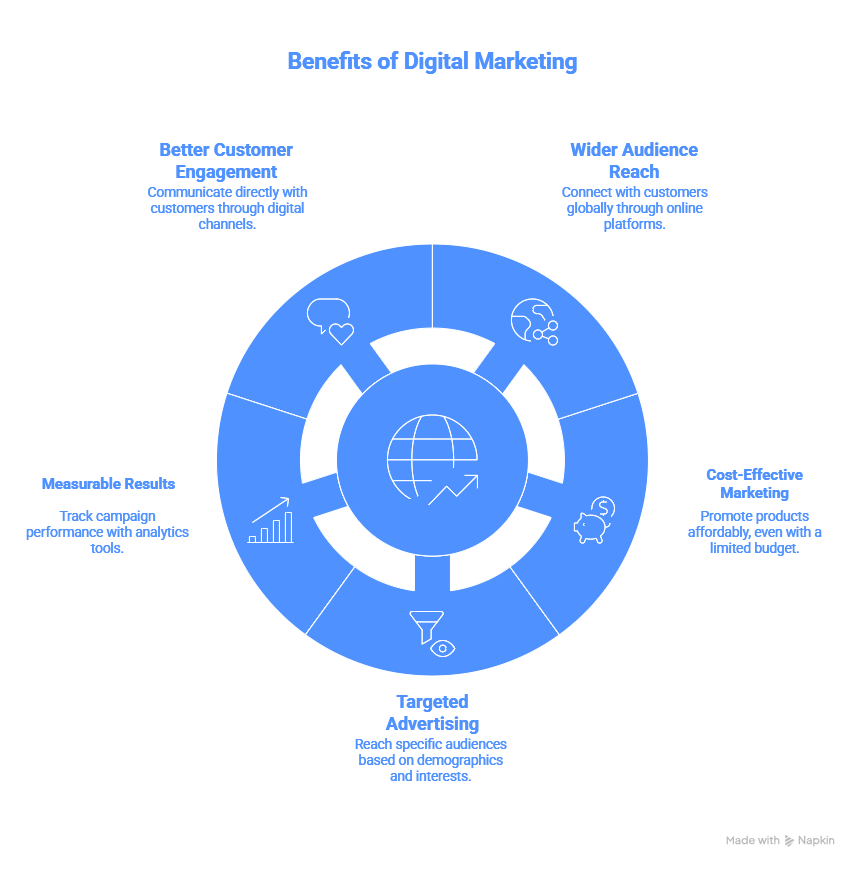
1. Wider Audience Reach
With digital marketing, businesses can reach customers all over the world. Unlike traditional marketing, online platforms allow brands to connect with a global audience.
2. Cost-Effective Marketing
Digital marketing campaigns are often more affordable than traditional marketing. Small businesses can promote their products even with a limited budget.
3. Targeted Advertising
Digital marketing platforms allow businesses to target specific audiences based on demographics, interests, location, and online behavior.
4. Measurable Results
One of the biggest advantages of digital marketing is the ability to track and measure results using tools such as analytics dashboards.
5. Better Customer Engagement
Businesses can communicate directly with customers through social media, email, and other digital channels.
Types of Digital Marketing
Digital marketing includes several strategies and channels that help businesses grow online. Below are some of the most important types of digital marketing.
1. Search Engine Optimization (SEO)
Search Engine Optimization (SEO) is the process of improving a website so that it ranks higher in search engine results pages. When people search for information on search engines, websites that appear on the first page receive the most traffic.
SEO involves several activities, including:
- Keyword research
- On-page optimization
- Technical improvements
- Link building
- AI Seo
Good SEO helps websites attract organic (free) traffic from search engines.
2. Pay-Per-Click Advertising (PPC)
Pay-Per-Click (PPC) advertising is a digital marketing model where businesses pay a fee each time someone clicks on their advertisement. PPC ads often appear on search engines, websites, and social media platforms.
Popular PPC platforms include:
- Google Ads
- Social media advertising platforms
PPC is useful for businesses that want quick visibility and immediate traffic.
3. Social Media Marketing
Social media marketing involves promoting products and services on social media platforms. Businesses use these platforms to connect with their audience, build brand awareness, and drive website traffic.
Popular social media platforms include:
- YouTube
- TikTok
- Twitter(X)
By sharing engaging content, businesses can build strong relationships with their followers.
4. Content Marketing
Content marketing focuses on creating valuable and informative content to attract and engage an audience. Instead of directly promoting products, businesses provide useful information that helps potential customers.
Examples of content marketing include:
- Blog articles
- Videos
- Infographics
- Guides and tutorials
- Newsletters
- Use cases
Quality content helps build trust and authority in the industry.
5. Email Marketing
Email marketing is one of the oldest and most effective digital marketing strategies. It involves sending emails to customers and subscribers to share promotions, updates, and useful information.
Businesses use email marketing to:
- Promote products and services
- Share company updates
- Build long-term relationships with customers
Email marketing also allows businesses to personalize messages for different audiences.
6. Affiliate Marketing
Affiliate marketing is a performance-based marketing strategy where individuals promote a company’s products and earn a commission for each sale or lead they generate.
Many companies run affiliate programs that allow marketers and influencers to promote their products through blogs, websites, or social media channels.
7. Influencer Marketing
Influencer marketing involves collaborating with individuals who have a strong following on social media platforms. These influencers promote products or services to their audience.
Since influencers have built trust with their followers, their recommendations can significantly impact purchasing decisions.
Key Digital Marketing Tools
There are many tools that help marketers manage campaigns, analyze performance, and improve strategies. Some popular digital marketing tools include:
- Website analytics tools
- Keyword research tools
- Social media management tools
- Email marketing platforms
- Design tools for creating visual content
These tools help marketers make data-driven decisions and improve their campaigns.
Benefits of Digital Marketing for Businesses
Digital marketing offers many advantages for businesses of all sizes.
Some of the key benefits include:
- Increased brand visibility
- Better customer targeting
- Improved return on investment (ROI)
- Real-time campaign tracking
- Stronger customer relationships
Businesses that effectively use digital marketing can grow faster and stay competitive in the modern marketplace.
Challenges in Digital Marketing
Although digital marketing offers many opportunities, it also comes with certain challenges.
Some common challenges include:
- High competition in online markets
- Frequent algorithm changes on platforms
- The need to constantly update marketing skills
- Managing multiple digital channels effectively
Marketers must stay updated with industry trends to overcome these challenges.
The Future of Digital Marketing
Digital marketing continues to evolve as technology advances. Several emerging trends are shaping the future of the industry.
Some of these trends include:
- Artificial intelligence in marketing automation
- Growth of video marketing
- Voice search optimization
- Personalized customer experiences
Businesses that adapt to these trends will be better positioned for long-term success.
Conclusion
Digital marketing has become an essential part of modern business strategy. It allows companies to connect with their audience, promote products efficiently, and measure results accurately.
For beginners, learning digital marketing can open doors to exciting career opportunities and business growth. By understanding the different types of digital marketing and applying the right strategies, anyone can start building a strong online presence.
As the digital world continues to evolve, mastering digital marketing skills will remain valuable for businesses and professionals alike.